The equipment is from a different war
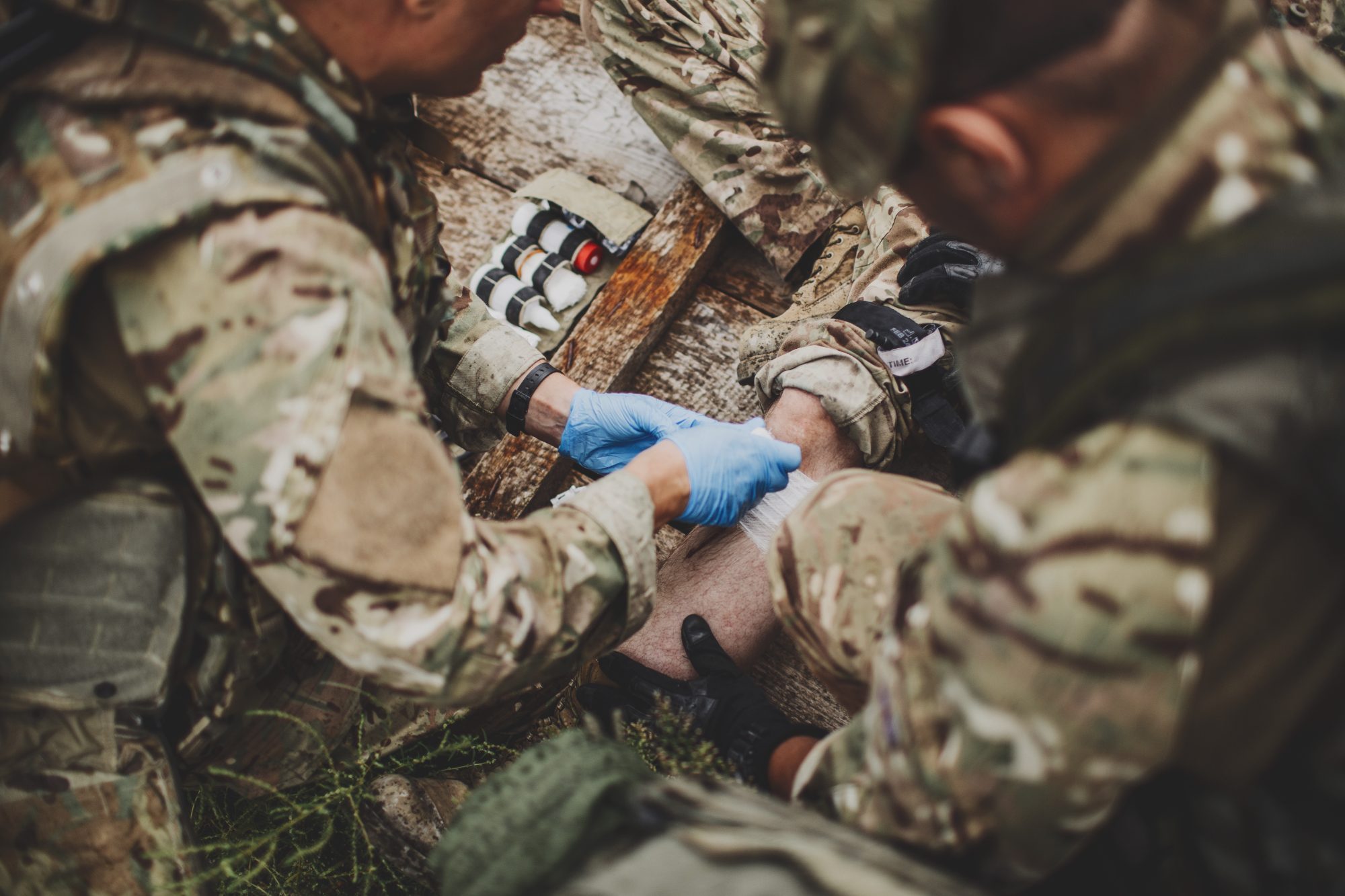
Current combat first aid doctrine was shaped by Iraq and Afghanistan: air superiority, controlled evacuation routes, a wounded soldier in surgery within the hour. Ukraine does not work that way. Drones make the evacuation itself the most dangerous phase, and time from injury to definitive care runs from eight hours to several days.
That changes what the equipment has to do. A tourniquet was designed to hold for ninety minutes, not for two days. Fragmentation injuries, not gunshot wounds, dominate the casualty picture. Infection, hypothermia and the slow consequences of lying in a field become the clinical problem, and almost none of the equipment in a standard kit was built for that timescale.
The equipment did not fail. The conditions changed, and the equipment did not follow.
We find the real problem before we build anything
Listen First
We interview medics, clinicians, veterans and specialists with direct connection to the war in Ukraine. Seven in-depth interviews so far, each documented and synthesised into a shared body of evidence rather than a set of anecdotes.
Map The Injuries
We build a picture of which injuries actually occur, when in the chain of care they get treated, and where treatment fails. Sources are cross-checked against current doctrine, including the 2026 TCCC guideline changes.
Then Design
A problem gets chosen when the evidence supports it, not when it is convenient. The result is a product intended to sit in every individual first aid kit and cover a gap current equipment leaves open.
Open on purpose
We have not chosen a single product direction, and that is a deliberate position rather than an unfinished one. Six directions are currently in play, from unnecessary tourniquet use and decision support during conversion, to hypothermia over multi-day evacuation, to reversing the supply chain and bringing treatment forward instead of moving casualties back.
Committing early would mean designing for the conflict we imagine. A field visit to Ukraine, in partnership with Defense Innovation Highway and Projekt Jutlandia, is what narrows six directions to one.
We are looking for people who have been there
If You Have Field Experience
Medics, clinicians, veterans, volunteers and anyone who has treated or been treated at the point of injury. One conversation, on your terms, anonymous if you prefer. Every interview we do changes what we build.
Contact →If You Work In This Field
Organisations, manufacturers, clinicians and defence bodies working on trauma care and casualty evacuation. We are interested in what you already know does not work.
Contact →If You Want To Build It With Us
We take on students and early-career engineers, designers and scientists who want real responsibility on a project where the research comes before the product.
Contact →More of them come home
War is brutal, and soldiers pay the price for it. The clearest value of this work is a simple one: more of the people sent to war get to come home to their families. The same injury patterns and treatment gaps show up wherever an explosive device causes multi-trauma far from help, including mass casualty incidents and disaster zones. Denmark and Europe are rebuilding emergency capacity right now on equipment designed for a different war.
Talk to us →